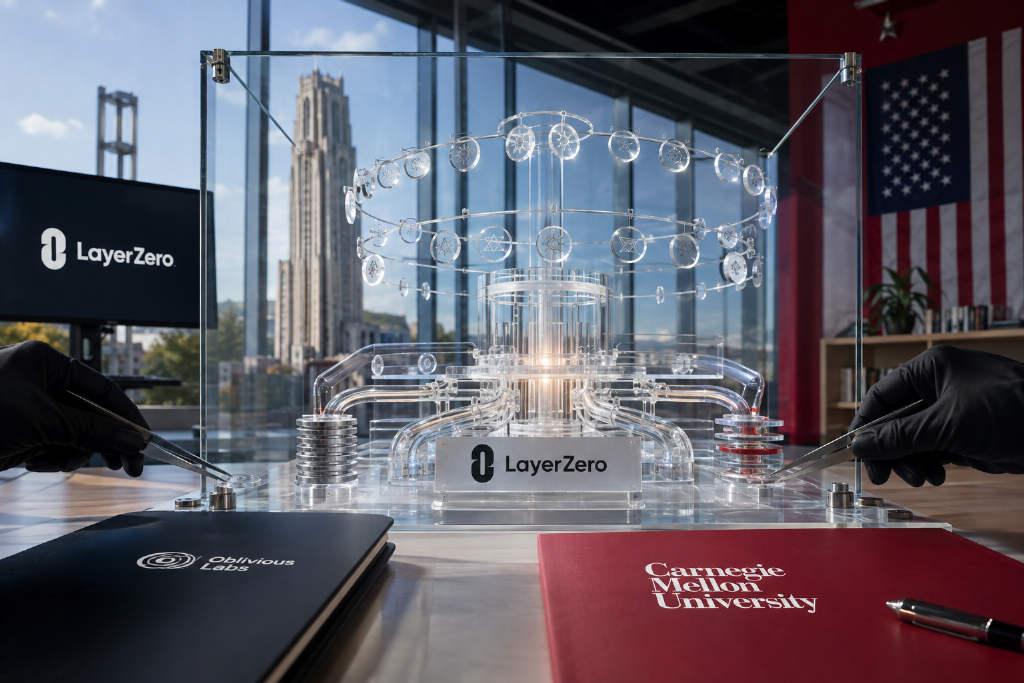
LayerZero2026-09-03 03:26:45LayerZero, Oblivious Labs, and Carnegie Mellon Researchers Propose OTTER, a MEV-Resistant AMMA research paper from LayerZero's research team, Oblivious Labs, and Carnegie Mellon University introduces OTTER, a novel automated market maker designed to resist maximal extractable value (MEV). OTTER uses a VCG-like batch auction mechanism that incentivizes truthful bidding and limits block builders' ability to profit from transaction ordering, sandwich attacks, or fake bids.1240
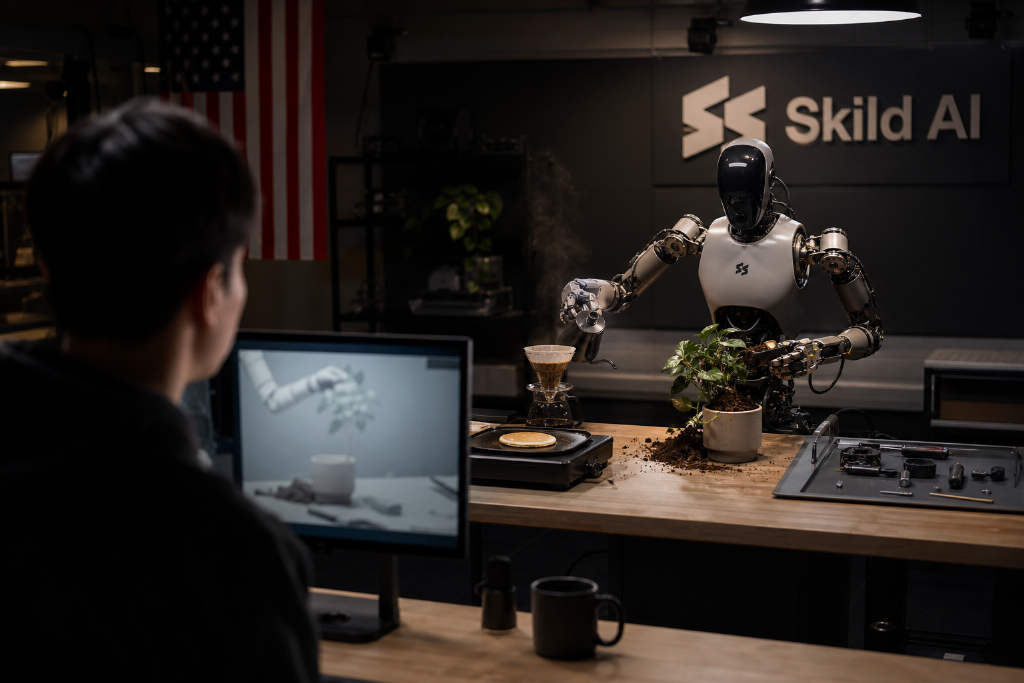
Skild AI2026-08-26 08:30:11Skild AI Unveils S1, a Robot Foundation Model That Learns New Tasks From a Single DemoSkild AI has introduced S1, a new robot foundation model built around in-context learning rather than task-specific post-training. The company says the model can watch a single human demonstration video and then carry out an unfamiliar multi-step task without fine-tuning, post-training, or any change to model weights. In the company’s demos, S1 handled long-horizon tasks such as making pancakes, brewing coffee, repotting a plant, and assembling equipment, with task windows extending past 10 minutes. According to the figures cited in the source article, S1 reached a 66% success rate on out-of-distribution tasks, compared with 9% for a language-prompted vision-language-action baseline. The article also says a conventional post-training approach would need roughly 380 demonstrations to match the result S1 achieved after seeing just one example, while 2,000 demonstrations could push the traditional setup to 86%. The report frames S1 as part of a broader shift in embodied AI, comparing robotics today to the BERT era in language models and arguing that in-context learning could move robots closer to a GPT-style paradigm. It also highlights Skild AI’s background, including its founding by Carnegie Mellon University professors Deepak Pathak and Abhinav Gupta, and its funding history, from a $300 million Series A at a $1.5 billion valuation in 2024 to a $1.4 billion Series C in January at a valuation above $14 billion.950